
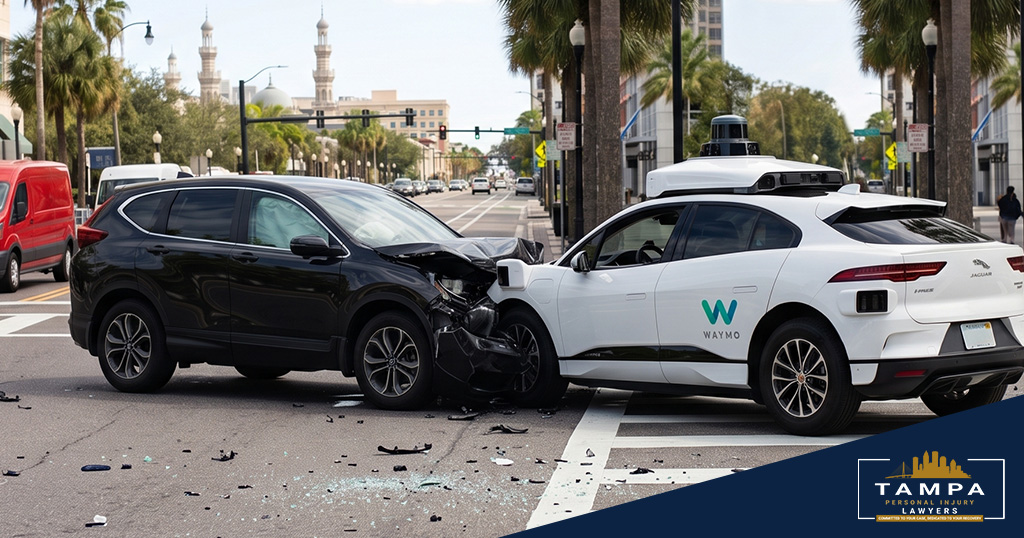
Tampa driverless rideshare accidents are no longer just a future concern. On September 1, 2026, Waymo began welcoming public riders in Tampa, bringing fully autonomous rides with no human driver behind the wheel. The launch also raises a new legal question: Who is responsible if a passenger, pedestrian, cyclist, or another driver gets hurt?
Driverless taxis, or robotaxis, rely on autonomous software and sensors instead of a human driver. If a crash happens, liability may involve the rideshare company, vehicle manufacturer, another driver, or more than one party.
If you are injured, a Tampa rideshare accident lawyer can investigate the crash, identify potentially responsible parties, review insurance coverage, and help protect your right to compensation.
Table of Contents
ToggleWhere You May See Tampa Driverless Rideshares Operating
Waymo did not launch across all of Tampa Bay at once. Its initial Tampa service area covers nearly 50 square miles, including Hyde Park, Westshore, Water Street, Ybor City, and the Channel District.
Riders can also use Waymo to reach several major Tampa destinations, including:
- Armature Works
- Florida Aquarium
- Raymond James Stadium
- Amalie Arena
- Steinbrenner Field
Waymo says it plans to expand its service areas gradually over time as more riders gain access. For now, however, Tampa’s driverless rideshare service remains concentrated within its established operating zone.
As autonomous rides become more common, drivers, passengers, cyclists, and pedestrians may increasingly encounter these vehicles on Tampa roads. That also makes questions about insurance and liability after Tampa driverless rideshare accidents more relevant for local residents.
Why Tampa Driverless Rideshare Accidents Can Still Happen
“Driverless” does not mean risk-free. Autonomous vehicles still share Tampa roads with human drivers, pedestrians, cyclists, construction crews, and emergency vehicles. A crash may happen because of another road user, difficult road conditions, the autonomous system, or several factors at once.
Potential crash situations can include:
- Sudden lane changes or aggressive merging by other drivers
- Rear-end collisions in heavy traffic
- Construction zones with temporary signs or changing lanes
- Pedestrians or cyclists entering the vehicle’s path
- Complicated turns, intersections, and highway merges
- Heavy rain, glare, or other conditions that reduce visibility
Autonomous vehicles use cameras, radar, LiDAR, and other sensors to detect surrounding traffic and hazards. However, unusual situations can still test how quickly and accurately the system responds.
After Tampa driverless rideshare accidents, vehicle data may help determine what the system detected, how it reacted, and whether another driver or road user also contributed to the crash.
Common Injury Scenarios In Tampa Driverless Rideshare Accidents
Injuries in Tampa driverless rideshare accidents can affect passengers inside the robotaxi, occupants of other vehicles, cyclists, and pedestrians. The severity often depends more on the type of collision than on whether a human or autonomous system was driving.
Common injuries may include:
- Whiplash and neck injuries
- Back injuries and aggravated discs
- Concussions and other head injuries
- Shoulder, wrist, rib, and hip injuries
- Fractures
- Cuts, bruising, and soft-tissue injuries
Passengers may also be hurt by sudden braking or abrupt evasive maneuvers, even when the vehicle avoids a larger collision.
Pedestrians And Cyclists Face Greater Risks
Pedestrians and cyclists have little protection when struck by a vehicle. Crashes may occur at crosswalks, during turns across bike lanes, or near pickup and drop-off areas.
These accidents can cause serious injuries, including fractures and traumatic brain injuries. When vulnerable road users are involved, preserving vehicle data and other evidence quickly can become especially important.
What To Do Right After Tampa Driverless Rideshare Accidents
If you can, move to a safe location and stay out of traffic. Then:
- Call 911: Ask for police and medical assistance, even if your injuries seem minor.
- Report the crash clearly: Note the time and location, request a case number, and explain that a driverless rideshare was involved.
- Document the scene: Take photos of the vehicles, damage, debris, road markings, signs, and surrounding conditions.
- Save your app information: Screenshot the trip ID, pickup details, route, timestamps, and any messages related to the ride.
- Get witness information: Collect names and contact details. If nearby businesses have cameras, note their locations.
- Write down what happened: Record what you remember while the details are still fresh.
- Avoid guessing about fault: Keep your statements factual and do not speculate about what caused the crash.
- Speak with a Tampa rideshare accident lawyer: A personal injury attorney can help preserve evidence, review insurance coverage, and investigate who may be responsible for Tampa driverless rideshare accidents.
Finally, follow up with medical care. Some injuries show up the next day. That includes concussions, neck injuries, and back pain.
Who May Be Liable In Tampa Driverless Rideshare Accidents
Liability can be more complex in Tampa driverless rideshare accidents than in traditional rideshare crashes because there may be no human driver behind the wheel. Florida law addresses that issue directly: when the automated driving system is engaged, the system is considered the vehicle’s operator.
Depending on what caused the crash, potentially responsible parties may include:
- The autonomous vehicle owner or fleet operator
- The rideshare or autonomous vehicle network
- A company responsible for maintenance or repairs
- The vehicle or component manufacturer
- Another driver whose actions contributed to the crash
Two important legal theories may come into play: negligence and product liability.
Negligence focuses on whether a person or company failed to use reasonable care. A claim could involve inadequate maintenance, improper repairs, or failure to address a known safety problem.
Product liability may apply when a defective vehicle, component, or autonomous driving system contributes to an injury. That could involve a defect in design, manufacturing, software, sensors, or another part of the vehicle.
Autonomous vehicle claims may also depend heavily on technical evidence. Vehicle logs, sensor data, maintenance records, and software information can help show what the system detected and how it responded before the crash.
Waymo riders also agree to terms of service that include liability limitations, but those terms do not necessarily eliminate every injury claim. Because several legal and technical issues may overlap, a Tampa rideshare accident lawyer can help identify responsible parties, review applicable terms, and preserve important evidence.
The Evidence That Often Decides Tampa Driverless Rideshare Accidents
Evidence in Tampa driverless rideshare accidents often goes beyond photos and a police report. Digital data can show what the vehicle “saw,” what it decided, and when it acted.
Key evidence may include:
- Event data and system logs: Vehicle records may include speed, braking, steering, system alerts, and how the autonomous system responded before a crash. An event data recorder may capture certain crash-related vehicle data, while separate autonomous-system logs can contain sensor and detection information.
- Vehicle camera footage: Exterior and interior views can capture lighting, traffic, and occupant movement.
- Third-party video: Nearby businesses, traffic cameras, and bystander recordings can help confirm timing and lane position.
- App and dispatch records: Trip ID, pickup instructions, route changes, messages, and timestamps can help establish what happened during the ride.
- Physical evidence: Vehicle damage, debris, skid marks, and road conditions can also help reconstruct the crash.
Because companies control much of the digital evidence, you should act quickly. Delays can lead to overwritten footage or lost logs. That is one reason Tampa driverless rideshare accidents often require prompt legal involvement.
Insurance Issues After Tampa Driverless Rideshare Accidents
Insurance questions can look different after Tampa driverless rideshare accidents because there may be no human driver with a personal auto policy. Instead, coverage may involve the autonomous rideshare company, vehicle owner, fleet operator, or another driver involved in the crash.
Florida requires certain fully autonomous vehicles operating through an on-demand network to carry substantial insurance coverage. However, disputes can still arise over which policy applies, how much coverage is available, and whether another party shares responsibility.
Common issues may include:
- Whether the autonomous rideshare policy applies to the trip
- Whether another driver also contributed to the crash
- Disputes over the cause and severity of your injuries
- Questions about access to onboard cameras, sensor data, and trip records
- Multiple injured people competing for available coverage
For Waymo and similar services, trip records can be especially important. App timestamps, pickup and drop-off details, vehicle identification, and ride history may help establish when the passenger was in an active autonomous ride and which coverage may apply.
After a crash, save medical bills, receipts, missed-work records, and future treatment recommendations. A Tampa rideshare accident lawyer can also help identify the available insurance policies and pursue evidence held by the driverless rideshare company.
FAQs (Frequently Asked Questions)
What are driverless rideshares or robotaxis in Tampa Bay?
Driverless rideshares, also called robotaxis, are autonomous vehicles that transport passengers without a human driver behind the wheel. Services such as Waymo use autonomous driving software, cameras, sensors, and other technology to navigate Tampa roads.
Where are driverless rideshares operating in Tampa?
Waymo’s initial Tampa service area covers nearly 50 square miles. It includes areas such as Hyde Park, Westshore, Water Street, Ybor City, and the Channel District, along with destinations including Armature Works, the Florida Aquarium, Raymond James Stadium, Amalie Arena, and Steinbrenner Field.
Who can be liable after Tampa driverless rideshare accidents?
Liability depends on what caused the crash. Potentially responsible parties may include the autonomous rideshare company, vehicle or fleet owner, maintenance provider, manufacturer, or another driver. Florida law also treats the automated driving system as the vehicle’s operator while it is engaged.
Does accepting Waymo’s terms mean I cannot make an injury claim?
Not necessarily. Waymo’s terms contain liability limitations, but contractual terms do not automatically eliminate every possible injury claim. Whether a provision applies can depend on the circumstances, the type of claim, and Florida law.
What should I do after a Tampa driverless rideshare accident?
Call 911, seek medical attention, document the crash scene, save your ride and app information, and collect witness details when possible. A Tampa rideshare accident lawyer can also help preserve vehicle data, identify available insurance coverage, and determine who may be responsible.
Injured in a Tampa Driverless Rideshare Accident? Speak With an Attorney
Rideshare accident claims can already involve complicated questions about insurance, fault, and corporate responsibility. Driverless vehicles add another layer by introducing autonomous systems, vehicle data, and potentially different responsible parties.
If you were injured in a Waymo, robotaxi, Uber, Lyft, or another rideshare-related crash, at Tampa Personal Injury Lawyers, we can review your case, explain your legal options and push back against insurance tactics.
Contact us for a free consultation and speak with one of our skilled Tampa rideshare accident attorneys about your injury claim.